
Bipolar Mood Disorder, formerly called manic depression, is a mental health condition that causes extreme mood swings that include emotional highs and lows (depression).
When one becomes depressed like I do, you tend to feel sad, hopeless or like a failure and you tend to lose interest or pleasure in most activities. Sometimes you can feel up and euphoric, full of energy and unstoppable. Other days one can feel unusually irritable or short off with people around you.
These mood swings can affect sleep, energy levels, judgement, activities, behavior and the ability to think clearly.
Bipolar Mood Disorder can be contracted through genetics, meaning it’s a gene that can be passed down to your children or grandchildren through DNA. Factors that may increase your risk of developing or act as a trigger for your first episode can include:
– Periods of high stress.
– A traumatic event (such as a death in the family).
– Drug or Alcohol abuse.
Bipolar Mood Disorder is commonly diagnosed with something else (such as acute depression – in my case). But here’s the thing, I may have a chemical imbalance in my mind (meaning my brain doesn’t have or produces enough serotonin or noradrenaline) but I won’t let this disease define me. However I am on a mission to smash the stigma around mental illnesses, because NO WE CAN’T PULL OURSELVES TOWARDS OURSELVES, and it’s not a made-up disease.
This is a life long disease, which I will have to manage with chronic medication and constant therapy. Trust me when I say in the beginning it was extremely frustrating, because it was hard for myself to accept this as an actual disease, but I had to shift my thinking. If I was diagnosed with diabetes or cancer, I would be fine with it because socially that is accepted and one doesn’t need physical proof to see the disease.
So if you know a family member with Bipolar Mood Disorder remember to take it easy with them, because until they learn their triggers you could switch them into a major depression or an extreme high where they think they are invincible.
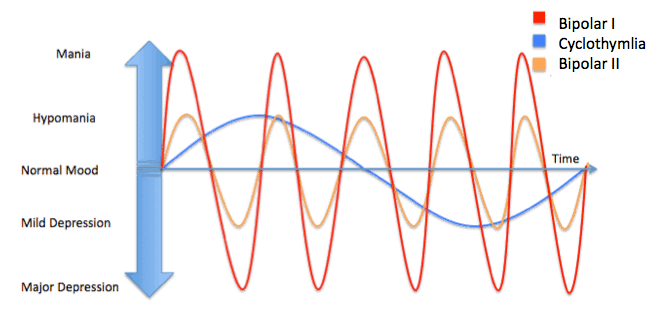
The above example shows how the different Bipolar Mood Disorders work in a brain. Remember when your partner/loved one/ family member/ friend or colleague wakes up in a dip, there is nothing much you can do. Rather let them know you are there and just give them a hug (letting them feel appreciated and loved, not like a failure).
I truly hope my personal blog helps people out there to understand, because I am learning myself through this journey.
Have a good night guys, and please spread the word about my blog. You never know who you could be helping by spreading my knowledge, and journey.
Sleep Tight guys.
 SMIS Blog
Thank you
LikeLiked by 1 person